Know the Signs of a Scam
Crooks use clever schemes to defraud millions of people every year. They often combine sophisticated technology with age-old tricks to get people to send money or give out personal information. They add new twists to old schemes and pressure people to make important decisions on the spot. One thing that never changes: they follow the headlines — and the money.
Every individual will likely be a target of a scam of fraudulent activity at some point, so be aware of some of the most common threats:
- Malware – Malicious software intended to harm computer systems through viruses, worms, Trojan horses, etc.
- Phishing – Attempts to collect personal information, such as user names and passwords by an attacker claiming to be an official source via email, phone call or text typically.
- Pharming – Online fraud that redirects a true website’s traffic to a bogus website, in an attempt to collect personal login information or card payment information.
- Social Engineering – Manipulating people through targeting emotional responses to trick them in attempt to give up or turn over valuable infrmation
It's good practice to be wary of anyone contacting you via email, phone, in-person who is asking personal information of you that you were not expecting contact with.
Additional steps to combat FRAUD:
Setup alerts on your bank account and debit card transactions:
Transaction alerts - Once logged into your app or online banking, select the drop-down menu of your name, select Settings then Alerts.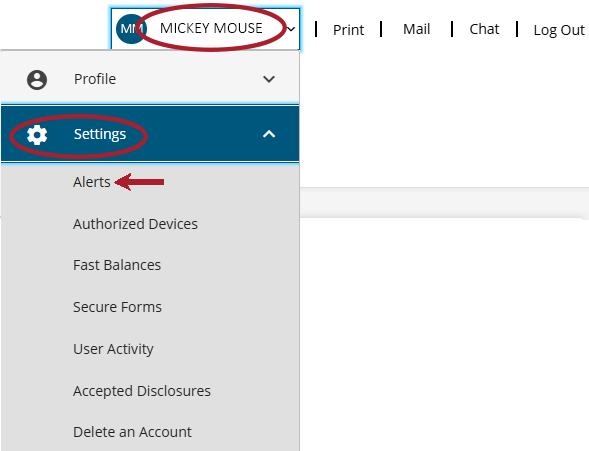
- Example Alerts include: Account balance threshold, debit transaction was posted, transation threshold, outgoing transwer over a threshold, etc.
Debit card controls and alerts - For additional debit card alerts, select the Cards on our landing page menu, then select Controls & Alerts.
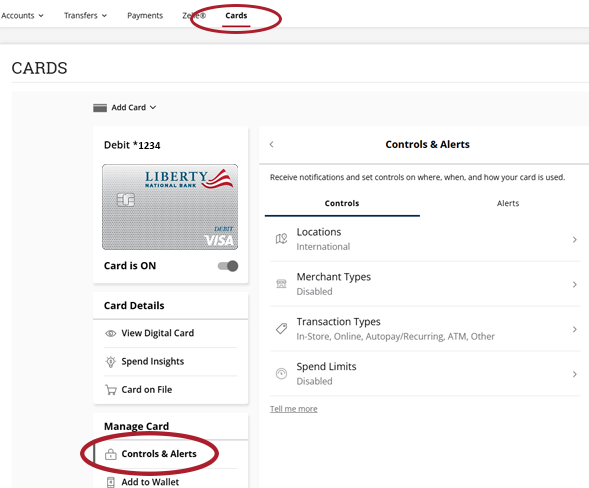
- Example controls & alerts include: Locations (limit usage to certain geographical regions), Merchant Types (limit usage to certain merchant types), Transaction Types (limit usage to certain transaction types - ex: in-store, online, etc.), Spend limits (setup transaction limits), or alerts for all or selected card transactions.
Review account activity:
By monitoring your transactions often and by reviewing your periodic statements to ensure only authorized transactions have occurred.Keep your info safe:
Do not disclose your banking credentials, passwords, or one-time pins and pass codes to anyone.
- We will never ask you for that information.
- Be aware of potential fraudsters who claim to be someone with authority, pretending to be a government official or an employee of the bank.
Online Video Tutorials